
testo 810
0560 0810
EAN:
4029547008320
960,00 kr.
/ Piece excl. VAT
InStock
1.200,00 kr. Incl. VAT
🟢 In stock
Click here and read all about infrared thermometers for temperature measurement. Here you will get the complete overview of the product range and application possibilities. Find your temperature meter here. One of the biggest advantages of infrared thermometers is their speed and precision. They can measure the temperature of surfaces in just a few seconds and with an accuracy of up to 0.1 degrees.
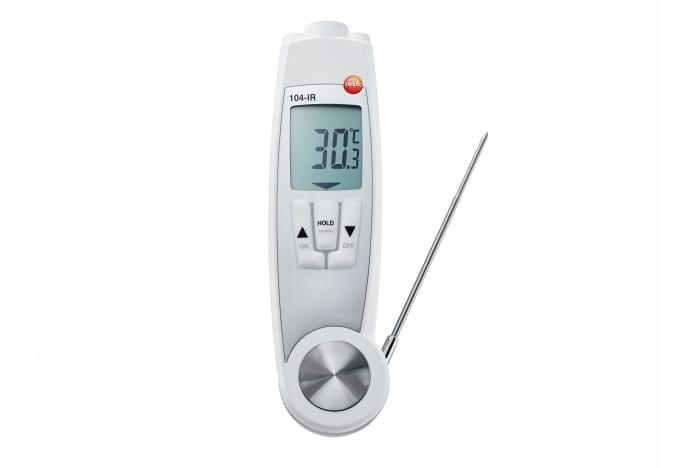
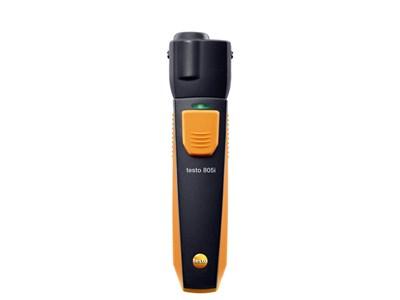


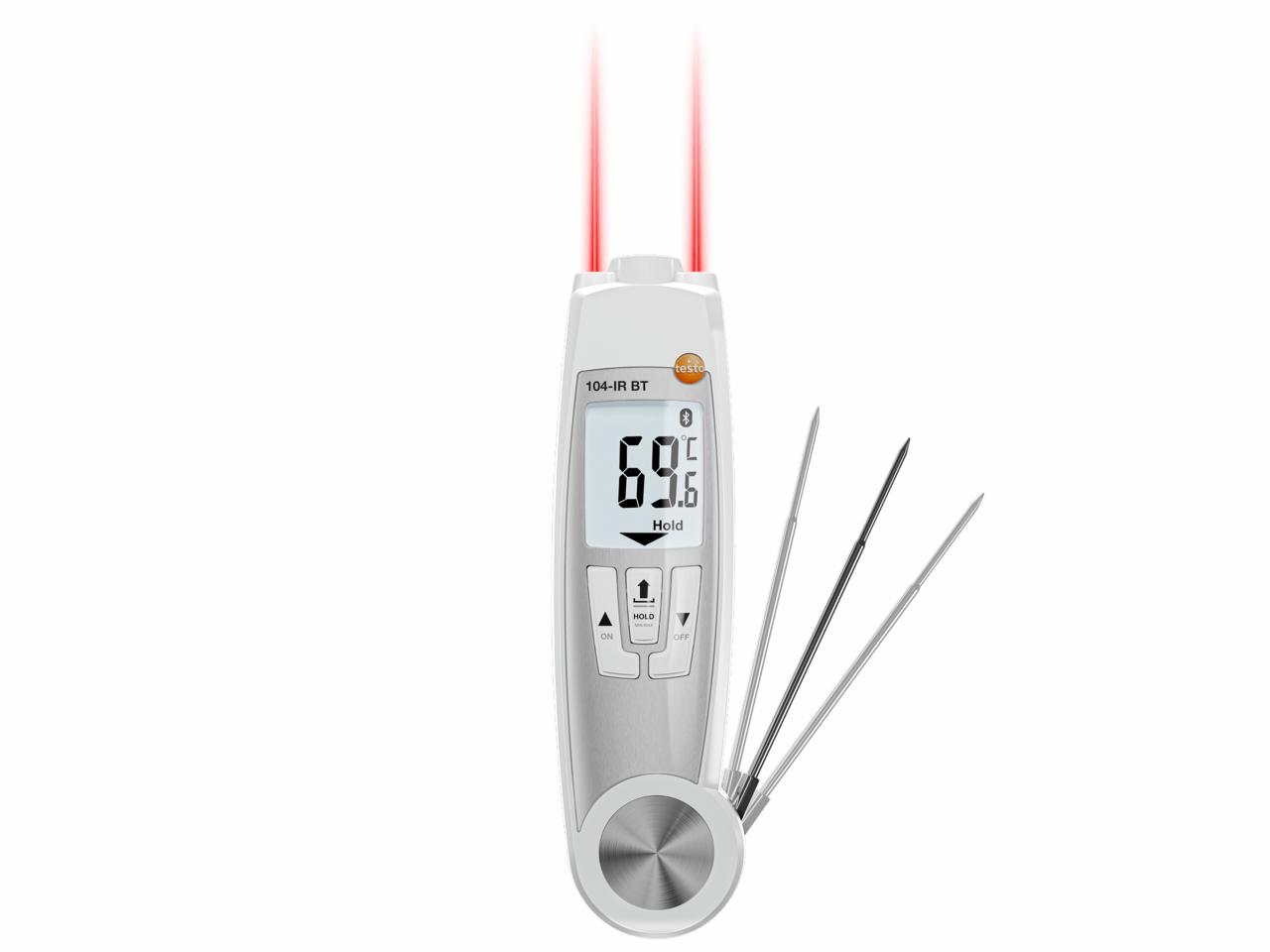
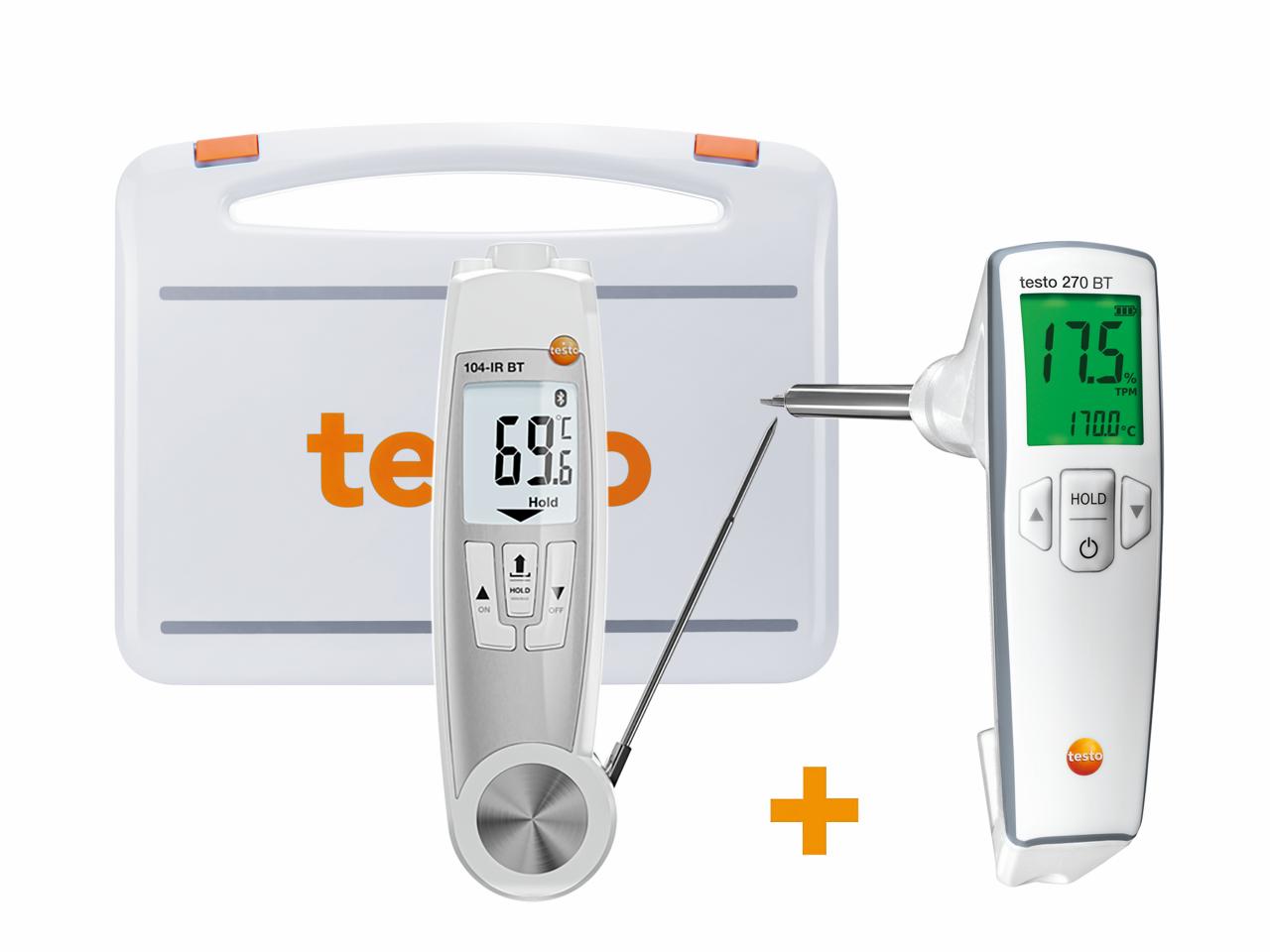
Infrared IR thermometer temperature gauge
There are many advantages to using fast infrared temperature measurement. Our measuring instruments are particularly suitable for temperature measurements in connection with food control of any type. Infrared temperature measurement is also suitable during building inspections as well as installations and work processes.
A digital thermometer for cooking
Temperature control is one of the key points in self-monitoring of food businesses. Therefore, it is important to have a food thermometer that provides an accurate and stable temperature measurement during self-monitoring.
Testo 106 insertion thermometer measures the temperature in food in just ten seconds. The smart “hold” button allows you to lock the temperature on the thermometer, so you do not have to remember the temperature for the logbook in your head. If you are performing self-monitoring of food, an accurate temperature gauge is absolutely necessary.
Accurate measurements are required when handling food
Even if your IR thermometer has an accuracy of +/- 3 °C and, for example, a greasy lens shows -1 °C or above, you cannot be sure that the limit value of +5 °C is maintained!
Infrared thermometers for measuring temperature in food must be accurate to be used for self-monitoring and documentation. All Testo infrared temperature gauges meet the requirements for HACCP and are approved for food.
An insertion thermometer or an infrared thermometer?
An insertion thermometer has the advantage that you get a measurement result immediately, whereas with an infrared thermometer you have to wait a little longer for a measurement result. The insertion thermometer can measure core temperature, while the infrared thermometer can measure surface temperature and five centimeters into the item.
The popular infrared thermometers are suitable for quick checks of food temperature in refrigerated counters or refrigerators, as you can quickly check the surface temperature of your fresh meat, dairy products, or frozen goods.
Temperature monitoring with data logging
For more permanent temperature measurement in refrigerated counters, we recommend a data logger from Testo. By combining several data loggers into one network, you can either wirelessly or via the internet constantly monitor all your refrigerators. Everything can be controlled via an app, where you can also set alarms.
Infrared thermometer (infrared temperature gauge) is suitable for use in measuring temperature in food
Food thermometers often must not touch the item being measured. This is where the use of an infrared thermometer comes into play, allowing you to measure temperature in and on the surface of food without contact. An infrared thermometer has become a necessary measuring instrument in several areas.
Discover a revolution in temperature measurement with our infrared thermometers. Whether you are a professional craftsman or want precise temperature measurement at home, our infrared thermometers deliver accurate results.
Why use an infrared thermometer?
6 tips for accurate measurement with IR infrared thermometer
Remember that we have courses in temperature measurement and measuring food temperature.
Contactless digital temperature measurement
One of the many advantages of infrared thermometers is that you do not affect the measurement result as the entire temperature measurement is conducted digitally and wirelessly.
Three quick advantages of an infrared thermometer
IR thermometers are energy meters
This means that the temperature must be calculated based on the formula below:
Q = const. * F * Cs * ε * T4
The emission factor included in the formula can be found in tables. The emission factor is temperature-dependent. This means it is not dependent on temperature.
The temperature is included in the formula as the temperature in power T4 (K). This means that you measure the radiation from the measuring object and thus the temperature.
Infrared temperature measurement
All items absorb electromagnetic radiation in the form of heat. And this heat is radiated again from the item in the form of infrared rays. It is this radiation that the instruments capture. The radiation comes only from the surface of the item – therefore, infrared measurements are contactless surface measurements.
Laser marking
The laser markings on some of the instruments serve as a form of pointer marking – without contact. This way, you can see where on the item the measurement is being taken.
The emission factor
Many items do not emit all the heat they absorb, and the emission depends on, among other things, the surface. This can be corrected with the emission factor. The emission factor is a numerical value between 0 and 1. The less reflection, the greater the emission factor.
The field of view
The infrared beam must cover the entire measurement field – and no more. If the field is not covered correctly, an average value is calculated.
Infrared Thermometer with memory
A thermometer like Testo 826-2 is ideal if you want to store many measurement results directly in the food thermometer.
Infrared high-temperature measurement
It is indeed possible to measure high temperatures infrared, it just requires better measuring equipment than a standard IR thermometer. If you need to measure extreme temperatures, a thermometer like Testo 835-1 can measure up to 600 degrees Celsius infrared.
Uncertainty and sources of error in infrared temperature measurement
Most IR thermometers on the market have an accuracy of +/- 1 to 3 °C.
How do you interpret the result of your measurement on refrigerated goods that must be stored below +5 °C?
a) If your IR thermometer has an accuracy of +/- 1 °C and your measurement shows +4 °C or more, you should double-check with an insertion thermometer. Otherwise, you risk that the temperature is actually above the +5 °C limit.
b) If your IR thermometer has an accuracy of +/- 3 °C and your measurement shows +2 °C or more, you should double-check with an insertion thermometer. Otherwise, you risk that the temperature is actually above the +5 °C limit.
FACT: Poor maintenance and lack of cleaning of the IR thermometer increase inaccuracy!
If the lens of your IR thermometer is scratched or greasy, the inaccuracy of the IR thermometer increases. Experiences from our accredited laboratory show that accuracy deteriorates by up to 3 °C. What does this mean for the example above if the error is 3 ºC?
a) If your IR thermometer has an accuracy of +/- 1 °C and your measurement shows +1 °C or more, you should double-check with an insertion thermometer. Otherwise, you risk that the temperature is actually above the +5 °C limit.
b) If your IR thermometer has an accuracy of +/- 3 °C and your measurement shows -1 °C or more, you should double-check with an insertion thermometer. Otherwise, you risk that the temperature is actually above the +5 °C limit.
It is therefore essential to maintain and clean your measuring equipment. Regular calibration of measuring equipment is also an absolute necessity to maintain food safety.
Combination thermometer infrared with external sensor
Testo's thermometer 845 can be connected to an external temperature sensor, so you can check if your infrared measurements are accurate enough. You can connect an external sensor to T830-T4, for example, to determine emission degrees or perform control measurements. The double laser marking shows the measurement field with great precision. Thermometers for insertion in food are the most precise method for measuring food temperature. The optimal measurement result is always found with an insertion sensor, but for quick control measurements, infrared is the way to go.
FAQ - Infrared thermometer
QUESTION:
ANSWER:
QUESTION:
ANSWER:
FACT
Read more about measuring equipment here and watch product videos on our YouTube channel.