Accredited calibration, mapping, and validation

Buhl & Bønsøe's laboratory is accredited by DANAK

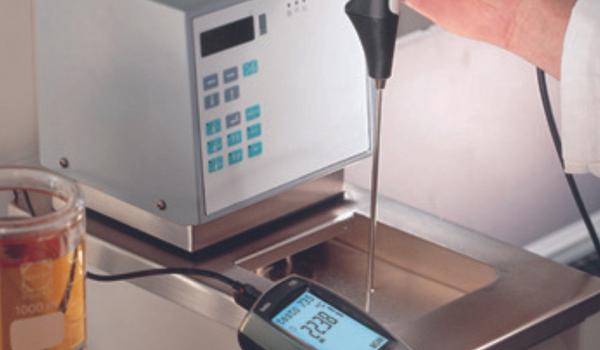
To calibrate is to ensure the quality of your measurement results. Often, it is laws and authorities that require documented measurements to carry a mark of quality, but the requirements may also come from the company itself or its customers.

For example, ISO 9001-certified industrial companies require that all measurements critical to the business be performed using calibrated measuring instruments. Another example is companies in the pharmaceutical industry, which must meet the requirements of Good Manufacturing Practice (GMP). We calibrate all brands of measuring equipment in our accredited laboratory.

DANAK akkrediteret kalibrering
kalibrering af måleudstyr

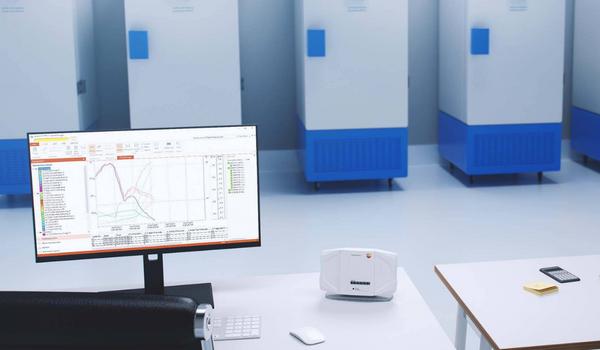
Do you need data loggers for temperature mapping for a shorter period?

Then it might be more cost-effective to rent the measuring equipment instead of buying it. At Buhl & Bønsøe, you can rent measuring equipment for your calibration, mapping, and validation tasks. We have over 300 data loggers available for rental. All our data loggers are rented out with a valid DANAK-accredited calibration certificate and comprehensive instructions.

Rental of qualified data loggers for mapping

Rental of qualified data loggers for mapping

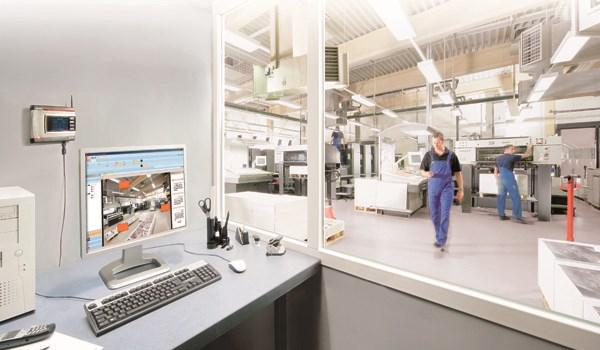
We offer rental of measuring equipment for temperature mapping. When you rent data loggers from us, you will receive thorough guidance - both in choosing the loggers, but also in which solution is best for you.

Rental of qualified data loggers for mapping

Rental of qualified data loggers for mapping

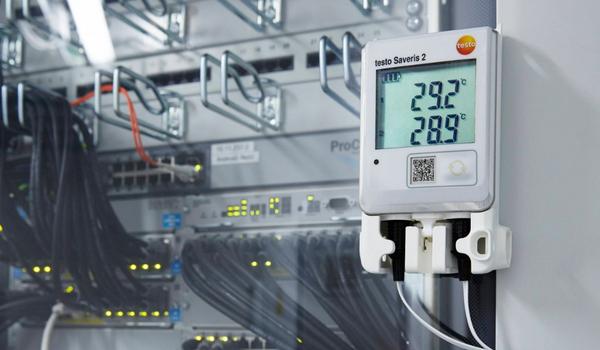
We offer rental of measuring equipment for temperature mapping. When you rent data loggers from us, you will receive thorough guidance - both in choosing the loggers, but also in which solution is best for you.

DANAK-accredited calibration of measuring equipment

DANAK-accredited calibration of measuring equipment

We carry out your calibration tasks quickly and professionally. If you have a calibration agreement, you will automatically be notified when it is time for calibration. Same-day delivery can be arranged in advance for urgent tasks.

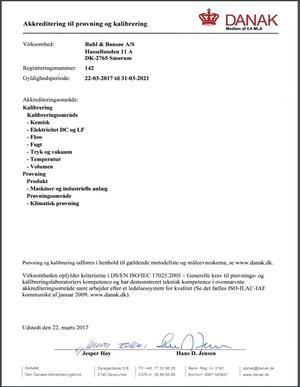
DANAK akkrediteringsdokument

DANAK Accreditation Document

View our DANAK accreditation document at english.

Gitte Andersen - Key Account Manager

Contact
You can contact us by phone at +45 82 82 93 00 (Mon.-Thurs. 8 AM - 4 PM and Fri. 8 AM - 3 PM) or send an email to info@buhl-bonsoe.dk.

Or you can write to:
Gitte Andersen
Key Account Manager & Calibration Consultant
+45 82 82 95 34
gia@buhl-bonsoe.dk

Calibration FAQ

Here you will find answers to the most common questions asked in connection with calibration

Calibration is about ensuring a measuring instrument’s deviation from a set reference value, with the aim of adjusting it so that measurements are displayed correctly on the scale.

Through thorough calibration, one ensures that data loggers measure the same values as all other data loggers. Calibration is typically required by law or customers – and is important for maintaining high quality, especially when working with food or pharmaceuticals.

Calibration is important because it ensures that the measuring equipment provides accurate and consistent results. Incorrect calibration can lead to inaccurate data, production errors, and overall inefficiency.

The timing of calibration depends on the type of equipment and its use. In general, it is recommended to calibrate equipment regularly, and especially after major changes, transportation, or repairs.

Calibration is performed by comparing a value – for example, temperature – read by a data logger with a reference. You can assess whether the data logger is measuring correctly by decoding what both the data logger and the reference measure.

A calibration is not an adjustment, but rather a check of the equipment, which indicates whether adjustment or repair is necessary. It is important to calibrate your measuring equipment because all measuring instruments change over time. Regular calibration is essential in order to document the stability of the equipment used over time.

The most common mistake is that the emissivity factor has accidentally been changed in your infrared thermometer. Different materials and surfaces emit different amounts of thermal radiation, which is why your instrument needs to be correctly set depending on what is being measured. The default setting for most materials is E 0.95.

Læs mere

Before adjustment, the sensor or instrument must be calibrated to determine the measurement error. Then the adjustment is performed. Finally, a second calibration is needed to see how much (or rather how little) the measurement error has been reduced. The remaining measurement error is entered as a correction value in the calibration certificate. It is extremely rare for the measurement error to disappear completely.

When an adjustment is made at one measurement point, it affects other points within the measurement range—especially in temperature and humidity sensors. Therefore, a correction value is still needed at the various measurement points.


An accredited calibration is performed using a method approved by DANAK, the Danish national accreditation body. A traceable calibration is carried out with similar quality requirements using a traceable reference, but the method is not necessarily approved by DANAK.


In most cases, these protocols are only factory checks and are not valid as calibration certificates.

However, there are exceptions. Read the product description and contact Buhl & Bønsøe if you need more information

It depends on various factors. Often, laws and authorities require that instruments and sensors be calibrated, but the requirements can also come from internal operations or customers.

For example, ISO 9001-certified industrial companies are required to perform all measurements critical to the business using calibrated measuring instruments.

Another example is companies in the pharmaceutical industry, which must meet the requirements of Good Manufacturing Practice (GMP).

To determine which criteria apply in your specific field, a good starting point is to contact your industry association. You can also visit the Danish Veterinary and Food Administration’s website for further information and guidelines. There you will find documents outlining the requirements for everything from bakeries to breweries.

The customer is always responsible for selecting the calibration points. You must identify which points within the measurement range need to be checked. If you only want to ensure that grilled chicken reaches a core temperature of +72 °C, you only need to check that specific point.

However, if a thermometer is used within a range from -18 °C to +120 °C, you should choose several measurement points where it is particularly important that the readings are accurate.

If you’re still unsure which points to select, feel free to ask the laboratory here at 
Buhl & Bønsøe.

To ensure reliable measuring instruments, they must be calibrated regularly at a calibration laboratory. The calibration laboratory compares the instrument with an accurate reference standard—that is, a traceable standard.

Most people choose to have their instruments calibrated once a year. However, instruments that are used frequently and in harsh environments may benefit from more frequent calibration.

Calibration is the process of determining the difference between the displayed value and the “true” measured value. In practice, this means that the instrument’s readings are compared to reference values, and the difference—or measurement error—is documented for each measurement point. After calibration, a certificate or report is issued stating the deviation.

As a customer, you might assume that a measuring instrument reads correctly after calibration. However, in reality, many—perhaps most—sensors and instruments on the market cannot be adjusted in that way. Instead, you receive a document indicating the difference between the actual “true value” and the value measured by the instrument.


In some instruments, the laboratory can change or "adjust" the value so that the display reading is as close to the true value as possible. After such an adjustment, another calibration is performed to determine how much (or rather how little) the measurement error has been reduced.

To calibrate is to ensure the quality of your measurement results. In many cases, laws and authorities require that documented measurement results carry a quality seal, but the requirements may also come from the company itself or from its customers.

For example, ISO 9001-certified industrial companies require that all measurements critical to the business be performed using calibrated measuring instruments.

Another example is companies in the pharmaceutical industry, which must comply with Good Manufacturing Practice (GMP) requirements.

To find out which criteria apply in a specific field, a good starting point is to contact your industry association. Food companies, for example, can visit the website of the Danish food authorities.

Comparing measurement values yourself against a known reference is called self-monitoring. For example, temperature and relative humidity can easily be checked this way.

When it comes to temperature, a “known reference” can easily be created at 0 °C by using an ordinary thermos flask. Fill it with as much ice as possible, then add water to fill it completely. Let it sit in the refrigerator for about 20 minutes. Stir the ice bath, and place the sensor tip in the center of the thermos.

Self-monitoring of humidity instruments can be done using so-called humidity salts. These are containers with a salt solution that provide a specific relative humidity level. A common option is to use a standard set with two containers at 11.3% and 75.3% RH. To perform the check, insert the humidity sensor into the container using a clamping screw in the lid. The sensor must remain there for a specified period (see the instructions provided with the containers).

An important thing to remember during any type of calibration—including self-monitoring—is that the instrument or sensor needs time to adapt to its surroundings. If you bring a cold instrument in from outside and immediately take a reading at room temperature, you will get a measurement error. A good rule of thumb is to let the instrument or sensor rest overnight before calibration.
The customer is always responsible for selecting the calibration points. During an inspection, you can never claim that it was the calibration laboratory that chose the points.

You must identify which calibration points within the measurement range need to be checked. For example, if you only want to ensure that grilled chicken reaches a core temperature of +72 °C, then you only need to check that single point. However, if a thermometer is used across a range from -18 °C to +120 °C, you should choose several measurement points where measurement accuracy is particularly important.

Det kan være en god idé at sørge for kalibrering af sit måleudstyr - dels af hensyn til lovkrav, men også fordi det kan være dyrt for dig, hvis dit måleudstyr måler forkert. Forkerte målinger kan give forkerte konklusioner, som i sidste ende kan have negative økonomiske konsekvenser for både dig og dine kunder.

En akkrediteret kalibrering giver et bedre dokumenteringsgrundlag og du sikrer dig, at både måleudstyr, forhold og udførelse er dokumenteret. Derudover sikrer du en kvantificeret præcision på dine kalibreringer. 

Med akkrediteret kalibrering kan du kontrollere og justere dit måleudstyr, inden det bliver dyrt. Hos Buhl & Bønsøe udfører vi kalibreringen hurtigt og professionelt. Har du en kalibreringsaftale, får du automatisk besked, når det er tid til kalibrering. Dag-til-dag levering kan aftales på forhånd ved hasteopgaver. Vores laboratorium ligger i Smørum, og du er velkommen til at lave en aftale og kigge ind.

We offer, among other services, on-site calibration, where our experienced calibration technicians come to your location to calibrate your measuring equipment. This can save time and minimize disruptions to your processes. On-site calibration typically involves the following steps:

  • Identification of the measuring instrument to be calibrated
  • Preparation of calibration standards and equipment
  • Comparison of the instrument’s results with the calibration standards
  • Adjustment of the instrument to minimize deviations
  • Issuance of a calibration certificate documenting the results

When working on-site, some measuring instruments may require daily calibration, while others can go longer between intervals. In addition to calibration, it is important to regularly inspect and maintain your instruments to ensure they function correctly between calibration intervals.


You should choose accredited calibration because it provides proof of the standard's traceability, issued by a third party that continuously ensures and verifies our calibration laboratory. With accredited calibration, you also do not need to verify equipment requirements or documentation.