What is a flue gas analyzer?
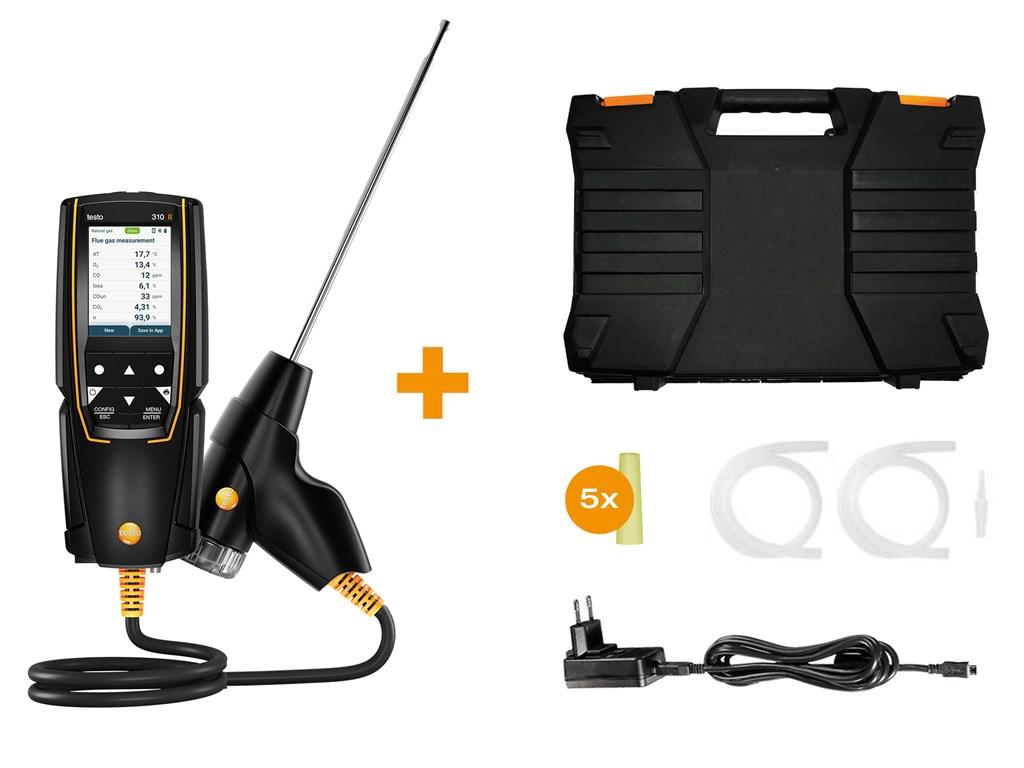
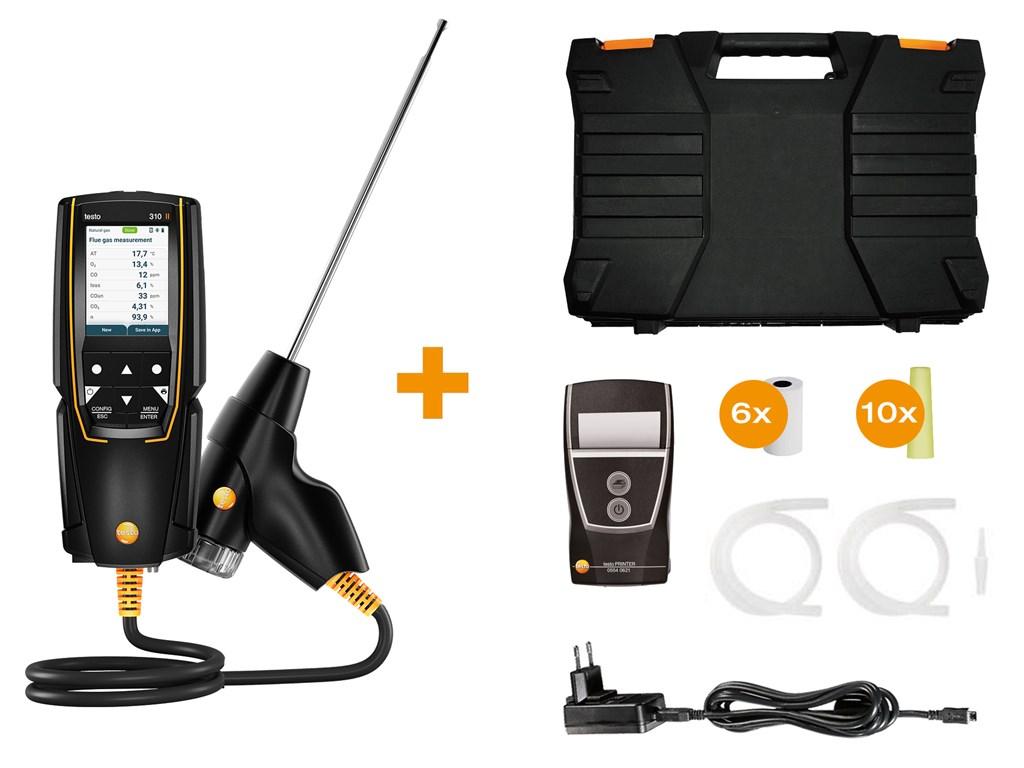
A flue gas analyzer is an instrument that measures flue gases to assess emissions and for efficiency purposes. A flue gas tester can be a cheap handheld device like the Testo 310 flue gas tester or a large fixed unit that is permanently installed with a probe, such as the Testo 350 emissions analyzer. Typically, a flue gas analyzer has internal memory where gas measurements are stored until the values are uploaded to a computer for further analysis of the emissions. Testo's modern flue gas testers can store up to a million measurement values internally.
Sometimes, it requires a bit more effort to accurately measure gas with a flue gas analyzer. For example, when measuring certain gases, such as hydrogen chloride or sulfur dioxide, the connected tube must be heated on the flue gas analyzer. Heating the tube prevents the condensation of certain types of gas into liquid before they can be measured.
Where is a flue gas tester used?
Flue gas analysis using a flue gas analyzer is often used in areas where legislation requires companies to monitor their emissions. A flue gas tester can also be used in areas where an industry or a ship wants to ensure that they are both efficient and environmentally conscious. By looking at the data, one can see if harmful gases are being emitted into the air. Companies should preferably avoid emitting gases that can cause pollution or a range of other environmental problems. You can conduct a complete emissions analysis with the Testo 350 emissions analyzer.
How do you use a flue gas meter?
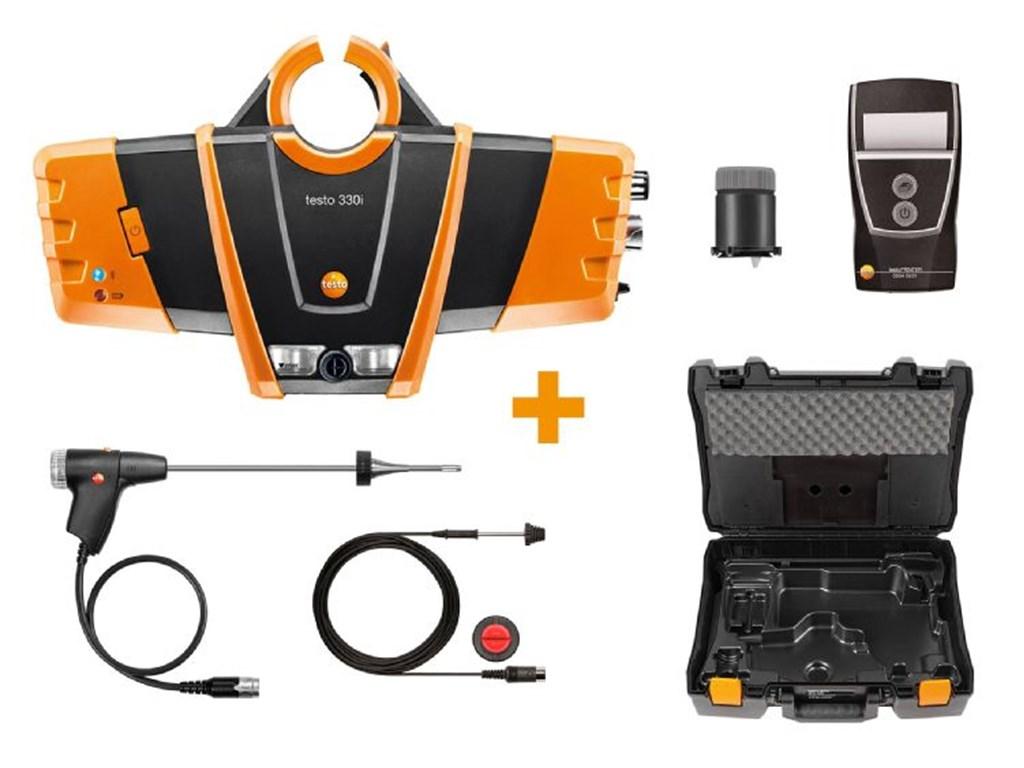
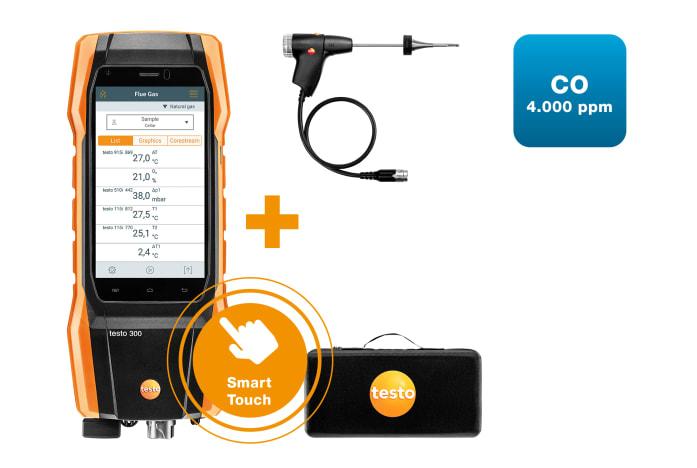
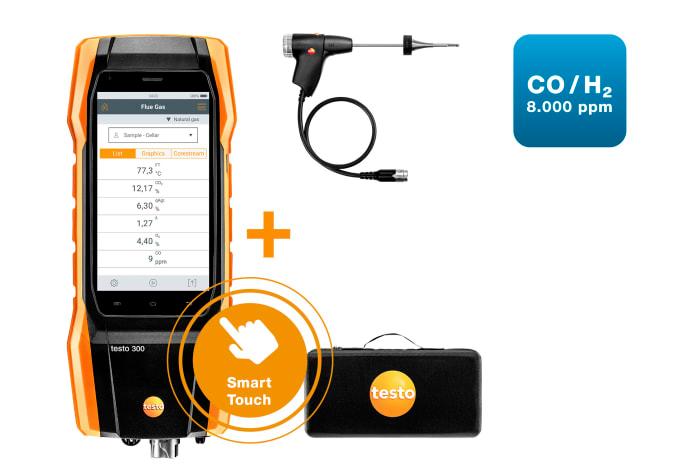
It depends, of course, on the device; the small flue gas meters do not require much guidance, just attach the sensor and turn on the device. The larger flue gas meters can be configured with up to 15 different sensors, but a maximum of 6 sensors can be used on the same device simultaneously. Testo's 330 LL2 flue gas tester can, in addition to flue gas analysis, measure draft, fine pressure, CO undiluted, differential pressure, differential temperature, CO, CO2 (calculation), and as something entirely new, the measuring equipment can perform tightness tests on gas pipe systems. All in one multi-measuring instrument.
Can I get a Danish flue gas tester?
Yes, in a way, as all our flue gas meters come with Danish menus; with us, you always get Danish menus, Danish software, and a Danish manual, if available. You also have the opportunity to talk to our advisors about your measurement needs. You can enter into a support agreement for your measuring instruments, ensuring you are prioritized when the measuring equipment needs calibration. We have our own calibration workshop with 6 full-time calibration technicians. Call and learn more now.
The latest flue gas analyzers from Testo come with their own app for flue gas analysis, and you will find both these and the traditional flue gas meters in this category. As a plumber, a flue gas device is absolutely essential if you work with gas-fired systems or heating systems. The category also includes an emission tester that can accurately measure emissions for a wide range of gases.
Flue gas testers for any use with or without display
We have everything in flue gas testers from the small handy flue gas tester Testo 310 to the large Testo 350 flue gas analyzer with six sensors. Between the two extremes, we have a wide range of flue gas meters that all cover the most basic needs for flue gas testing.
For the slightly more advanced needs for flue gas analysis, we have the Testo 310 series, which offers flue gas testers that become progressively more advanced and with greater sensitivity and more features in the larger models.
If you are about to start up or test a smaller heating system, the 310 series is a good place to start. It can also be used by chimney sweeps to test wood stoves.
Flue gas testers with accessories
The larger flue gas testers can be equipped with the measuring cells you need for your service and adjustment tasks as required. Among the many measurement parameters in the flue gas analysis itself, we can mention: O2, CO2, COH2, NO, NO2, SO2, NOx, Dew point (Tdew), ΔT, ΔP, COabsolute, Flue gas loss (qA), Lambda (λ), and Efficiency (η).
We are happy to help find the right flue gas device
With our selection, we can always find the right flue gas meter in stock for your specific needs. And if your measurement needs change later, there is usually the possibility to switch to a sensor that can measure some other parameters or perhaps a larger model. We are always ready to advise you on purchasing the right flue gas tester or the right flue gas sensor.
Wireless flue gas meter with app
The latest in flue gas analyzers is wireless flue gas measurement. Here you place the measuring instrument on the subject to be measured, after which the measurement data is sent via Bluetooth to your phone or tablet. The system supports both Android and iOS operating systems. This makes it unnecessary to have a display on the measuring equipment, as the data reading occurs via the app.
How do you measure flue gas?
The flue gas tester has a sensor that is placed in the chimney. The flue gas device then draws the collected flue gas past a series of measuring cells that measure different parameters (depending on the model of the flue gas analyzer). These values are converted into measurement values, which are displayed on the large screen or exported to the accompanying software.
Does a flue gas meter need to be calibrated?
Like all other measuring equipment that needs to measure accurately, calibration is required with a flue gas tester. If you enter into a service agreement with our calibration laboratory, your measuring instrument will be prioritized in the queue for calibration. And we will automatically call in your flue gas tester when it is time for re-calibration.
Diverse flue gas tester program. On this page, you will find a range of professional flue gas testers also called flue gas analyzers. Click here and read all about measuring equipment for emission measurement (flue gas analysis, soot measurement, nanoparticle measurement, leak detection, etc.). Here you get the full overview of the product range and application possibilities.
There are different variants of measuring instruments for flue gas analysis, depending on what the measuring equipment is to be used for. All our flue gas testers come with Danish software and Danish menus, just as the Danish fuel values and formulas are embedded in the firmware.
Flue gas tester for starting heating systems
When you need to put a smaller heating system into operation, you only need one measuring instrument, a Testo 310 flue gas detector. The Testo 310 is a relatively simple device that is optimal for adjusting and optimizing combustion in the boiler; all parameters are displayed on the large display, and it is easy to switch between the different measurement parameters via the built-in menus.
Testo flue gas analyzer with its own app
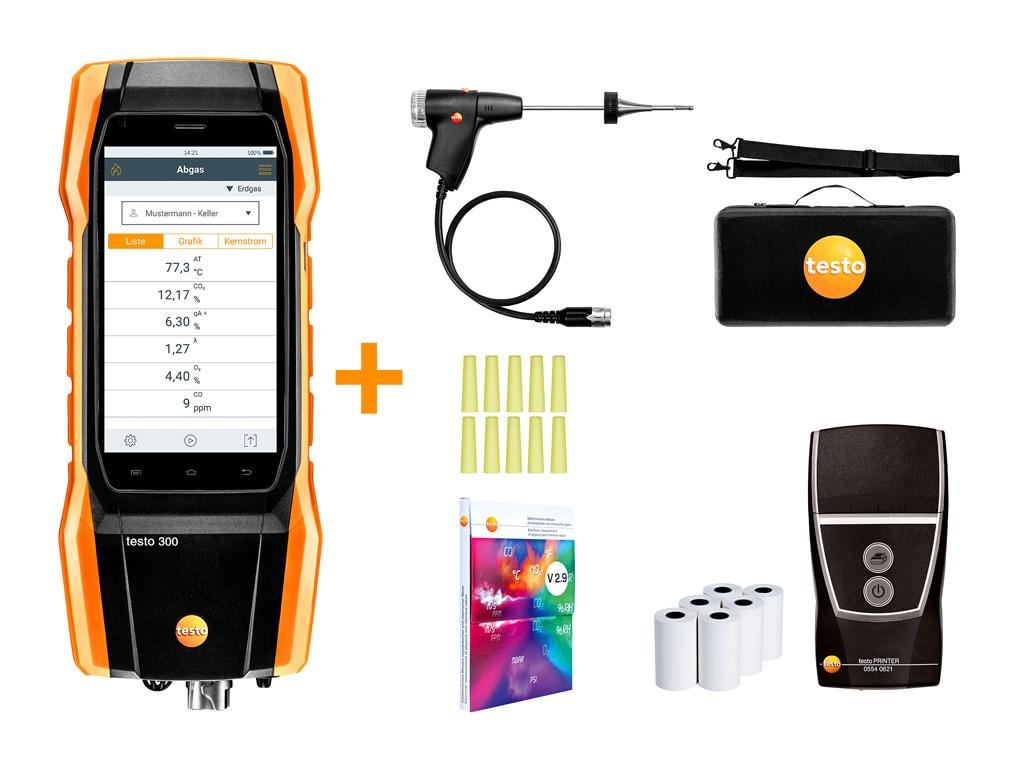
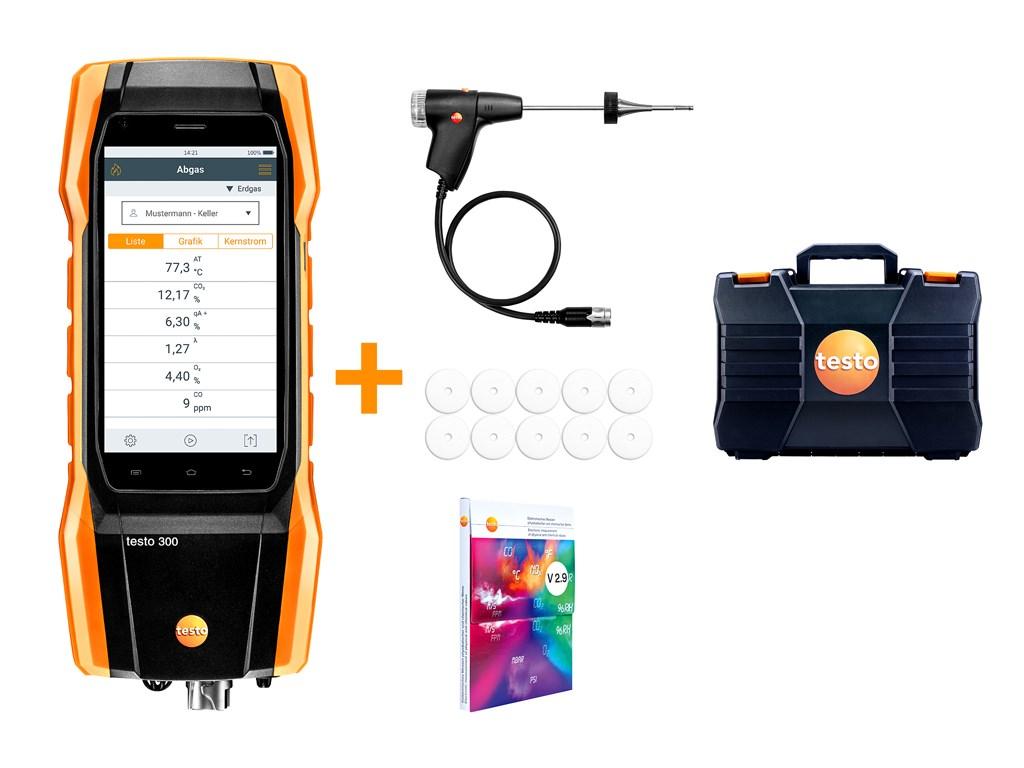
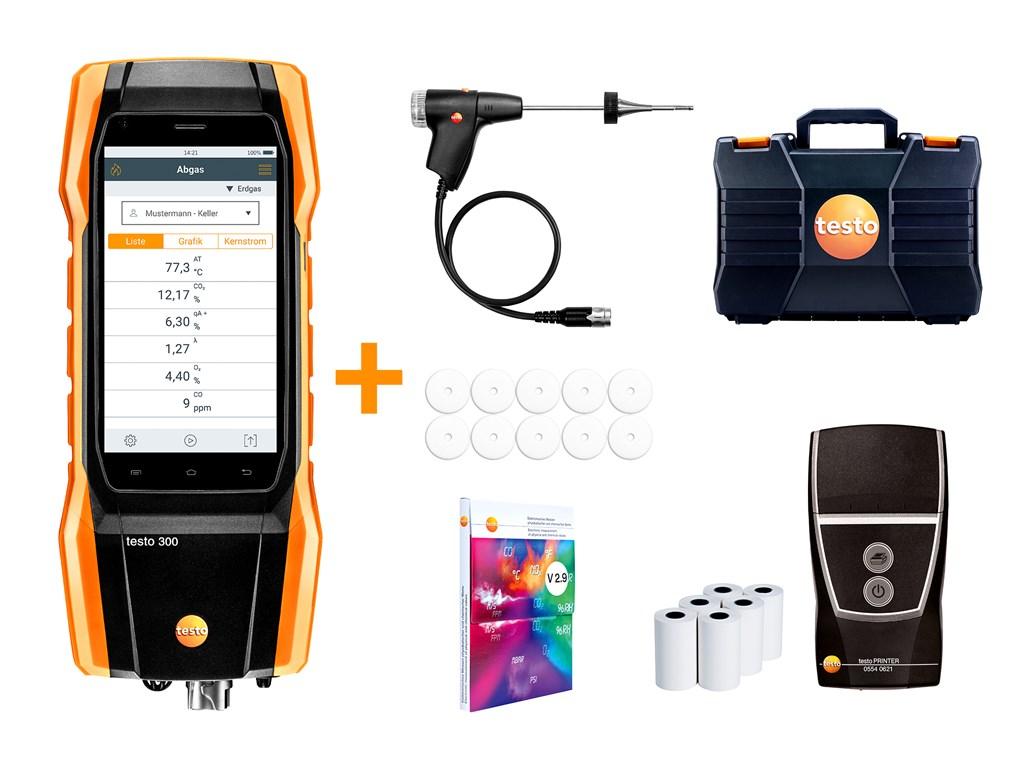
Advanced and professional flue gas tester operated with an app from your smartphone, we are talking about the Testo 330 LL, which is available in both a version with a display and a version that can be remotely controlled via your phone or tablet. You have the option to get a 6-year warranty on this flue gas tester by signing a support subscription through our service and calibration department.
In addition to flue gas analysis, the 330 LL can measure draft, fine pressure, CO undiluted, differential pressure, differential temperature, CO, CO2 (calculation). If you buy a 330 series, it will be a long time before you need a new flue gas analyzer. By signing the service agreement, you will have the opportunity for faster service when calibrating your measuring equipment. If you need NOx measurement, the T330 can also do that. It just requires an additional measuring cell.
The 330 series is optimal for servicing larger heating systems and biogas systems; you get an advanced professional flue gas tester with Danish menus and the possibility of support in Danish by calling our support department. There is the option to purchase additional sensors from the large and versatile sensor program for the measuring instrument; if you are unsure which sensor to use in a given situation, we are always ready at the phones during our opening hours from 8 AM to 4 PM. We have most sensors at our headquarters centrally located in Smørum, where you can also submit your measuring equipment for service and calibration.
Efficiency measurement
Flue gas analysis instruments are one of the tools used daily by service technicians to achieve optimal adjustment of engines. Flue gas measurement is used on industrial engines when they are commissioned, with regular maintenance intervals, or for troubleshooting when they run unstably. The background for flue gas measurement is to set the engine to the optimal operating parameters while complying with applicable limit value regulations. Regular maintenance work contributes significantly to avoiding long-term operational downtime, ensuring system quality, and thus a high efficiency level, as well as having a significant impact on emission levels.
Emission measurement
Flue gas analysis in industrial installations often needs to be performed under extreme conditions, such as high temperatures, high humidity, or high dust content in the flue gas. Emission measurements are carried out in resource- and energy-intensive processes where large amounts of emissions such as carbon monoxide (CO), carbon dioxide (CO2), nitrogen oxides (NOX), or sulfur dioxide (SO2) are produced.
These emissions are subject to strict regulations to ensure that limit values are adhered to and to optimize processes and methods. With a number of exhaust gases, sensors, and other special features, such as automatic dilution or Peltier gas preparation, Testo's exhaust gas analyzers are specifically designed for these extreme requirements.
Compliance with legal requirements
In most countries, the operation of all types of industrial plants (e.g., power plants, steel mills, cement plants, glassworks, and chemical plants) and local authority facilities, even small production sites, is subject to strict regulations regarding exhaust gas emissions into the atmosphere. Appropriate measures are taken to ensure and regularly check that the components defined as pollutants do not exceed certain limit values in the flue gas.
Read more about measuring equipment here and watch product videos on our YouTube channel.