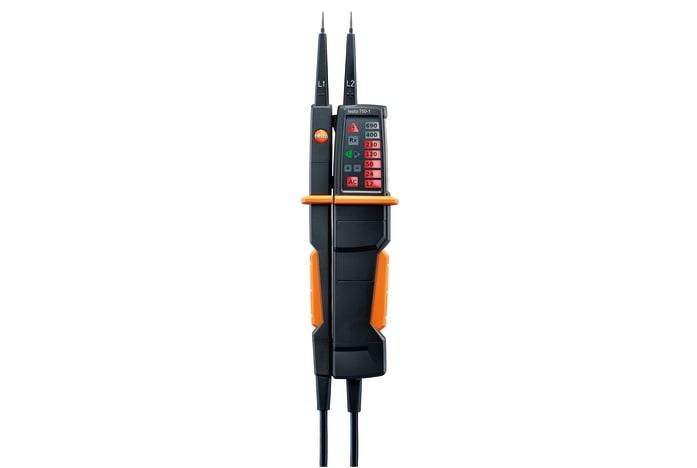
testo 750-1
0590 7501
EAN:
4029547013898
425,00 kr.
/ Piece excl. VAT
OutOfStock
531,25 kr. Incl. VAT
Produced to order
A voltmeter or voltage tester is a general term for electrical measuring instruments used during the installation, commissioning, troubleshooting, and maintenance of electrical installations and electrical devices.
A voltage meter or current tester is an indispensable tool in the modern electrician's toolbox, such a voltage tester should be handy, robust, and easy to operate as often as it is used in daily work.


What is a voltmeter?
A voltmeter is an electrical measuring instrument used to measure electrical voltage in an electrical circuit. It is an essential part of electronic equipment and is used by electricians, electronics engineers, and other professionals. A voltmeter measures the voltage difference between two points in an electrical circuit and displays the result in volts (V) on a scale or a screen. The voltmeter is designed to have a high input resistance, which means it draws minimal current from the circuit while measuring the voltage, so it does not affect the circuit it is measuring.
There are different types of voltmeters, including analog and digital voltmeters. Analog voltmeters display the voltage level using a needle that moves across a scale, while digital voltmeters display the voltage level numerically on a screen. Digital voltmeters are usually more accurate and easier to read than analog voltmeters.
Voltmeters can be used to test and measure voltage levels in various electrical circuits and components, such as batteries, wires, outlets, and electronic devices. Voltmeters can also be used to diagnose electrical problems and troubleshoot.
The benefits of using a voltmeter
Overall, a voltmeter can help ensure that an electrical circuit is functioning correctly and that any problems can be identified and resolved quickly and efficiently.
Different electrical measuring instruments for your needs
Voltmeter or ammeter? There is, of course, a difference between whether you need to see if there is voltage through the circuit or if your need is to measure whether high current is being conducted correctly through a wire; we have a voltage tester for every purpose.
Our voltmeters are produced by German testo, which has over 60 years of experience in producing professional measuring equipment for electricians and other industries, ensuring you consistent high quality every time you purchase new measuring equipment from Testo. It is important to have a basic knowledge of electrical circuits and measuring techniques to use a voltmeter correctly and achieve accurate results. If you are not familiar with using a voltmeter, it is recommended to seek help from a professional electrician or technician.
Voltmeters and ammeters
Voltmeters and ammeters are two different types of measuring instruments used to measure electrical parameters in an electrical circuit. A voltmeter measures electrical voltage between two points in the circuit, while an ammeter measures electrical current flowing through a component or a wire. A voltmeter operates by connecting the instrument in parallel with the part of the circuit where the voltage is to be measured. When the voltmeter is connected correctly, it will measure the electrical voltage between the two points in the circuit and display the result on a scale or a screen. An ammeter works a bit differently. The ammeter must be connected to the part of the circuit where the current is to be measured. When current flows through the ammeter, it will measure the current and display the result on a scale or a screen. Voltmeters and ammeters can be analog or digital. Analog measuring instruments use a needle and a scale to display the result, while digital measuring instruments display the result numerically on a screen. Digital measuring instruments are usually more accurate and easier to read than analog measuring instruments.
The two last electrical measuring instruments that are most well-known are the polarity tester and clamp ammeter.
Digital multimeters
A multimeter, also called a universal instrument, is used when you want to measure several different electrical phenomena such as current, voltage, frequency, and resistance with the same measuring equipment. They are more versatile than single-function measuring instruments, such as voltmeters or ammeters, and are therefore a popular device among electronics and electrical engineers. Digital multimeters use a range of advanced technologies and features, such as a high-resolution screen that can display measurement values and graphical representations, and an automated range and area selection that allows measuring a wide range of electrical values without having to adjust the device manually. Additionally, digital multimeters are usually more accurate than analog multimeters.
Digital multimeters can also have other advanced features, such as data hold, temperature measurement, diode testing, continuity testing, and much more. These features can be useful for troubleshooting and diagnostics in electrical circuits and can help you find and fix faults quickly and efficiently. Digital multimeters are portable and lightweight, making them easy to use and transport.
We only sell digital multimeters with an AD converter that converts the measurements into numbers displayed on the screen. Earlier multimeters were referred to as moving coil instruments.
Polarity tester and clamp ammeter
A polarity tester is used to find out which wire is live, as well as whether there is current in a given wire. A clamp ammeter is a measuring instrument used to measure the current flowing through a wire or a component without having to break the circuit. The clamp ammeter works by clamping the jaws around the wire or component and measuring the current flowing through it.
You can greatly benefit from using a clamp ammeter in measurement cabinets with tight or no space; you simply place the clamp on the wire to be measured and read the display.
Saveris current rectifier
The last category is the 1-channel testo Saveris U1 E Ethernet sensor / analog coupler, which enables the recording of other measurement parameters in the testo Saveris monitoring system by integrating all transmitters with standardized current/voltage interfaces.
Are you working with electricity and need accurate measuring instruments?
At Buhl & Bønsøe, you will find several types of measuring devices for electrical work. We have everything an electrician needs in their daily work. Explore the selection below and choose your new current and voltage tester, non-contact voltage tester, or polarity tester today!
Are you looking for a voltage tester?
In electrical work, there can be several relevant voltages to measure. This naturally means that there are also different types of measuring instruments. At Buhl & Bønsøe, we offer several good meters with many smart details, various functions, and high safety. In our selection, you can choose:
It naturally depends on your measurement which instrument you need. A voltage tester, also called a voltage meter or voltmeter, is the right choice for you if you have tasks in, for example, electrotechnics, industry, and maintenance. With a voltage tester, you can perform professional voltage, continuity, and polarity tests in several steps.
With us, you can get both larger models or a more handy voltage tester, so you can perform your tasks in the best way. Feel free to click on the individual products to read more about specific approvals and the many extra features and smart details that come with them. This way, you can also anticipate any requirements for extra high safety.
Why choose a voltage tester?
The two most important characteristics of electricity are voltage and current. To measure this, we have voltmeters, that is, voltage testers, and ammeters. A voltmeter measures the voltage between two points, while the ammeter measures the current through them. Additionally, there are multimeters that can measure both current and voltage at the same time.
A multimeter is therefore also often referred to as a universal instrument. It is used when you want to measure several different electrical phenomena such as current, voltage, and resistance with the same measuring equipment. We only sell digital multimeters with an AD converter that converts the measurements into numbers displayed on the screen. Multimeters have also previously been called moving coil instruments. Furthermore, there are several electrical measuring instruments, but the most well-known are:
A polarity tester is used to find out which wire is live, as well as whether there is current in a given wire. A clamp ammeter is used to measure voltage in a wire without having to cut the wire and strip it. You can greatly benefit from using a clamp ammeter in measurement cabinets with tight or no space; you simply place the clamp on the wire to be measured and read the display. It cannot be easier to measure current.
Need help finding your new voltage tester?
At Buhl & Bønsøe, we have over 40 years of experience in selling measuring equipment to several industries. Whether you need to perform self-tests, inspections, or other tasks, you should be able to find what you need with us. It is important to us that you easily and safely find the right equipment for your specific work tasks. We take pride in delivering strong solutions and good service.
This also means that you can contact us at any time if you need advice and guidance when choosing your voltage tester. Is it a voltage tester with fully automatic switching? Is it available with optical indication? What are the advantages of an integrated protective cap? Do I need acoustic indication? The questions can be many.
Any ambiguities and misunderstandings are often avoided through a qualified conversation, and you can always have such a conversation with us. If you are in doubt about anything regarding your new voltage tester, what extra features you need, how to achieve high safety, or anything else, we are ready to help. Also, remember that we also offer several relevant courses for both you and your employees in areas such as thermography and data logging.
Get everything in measuring equipment
There are naturally high demands for the measuring equipment used today. Therefore, at Buhl & Bønsøe, you will find many different meters with a wealth of specifications. In addition to a current and voltage tester, also called a voltmeter, you can find smart designs that make your daily work easier in the following categories:
Polarity tester and clamp ammeter
A polarity tester is used to find out which wire is live, as well as whether there is current in a given wire. A clamp ammeter is used to measure voltage in a wire without having to cut the wire and strip it.
You can greatly benefit from using a clamp ammeter in measurement cabinets with tight or no space; you simply place the clamp on the wire to be measured and read the display. It cannot be easier to measure current.
This way, you can measure, control, and generally perform your work with electronics, thermography, and much more accurately. This applies regardless of whether you have chosen, for example, a 2-pole voltage tester or another instrument.
In our selection, you will find regular new products, and we strive to provide you with as good and clear a purchasing experience as possible. Therefore, you can also easily find free software, relevant information on our knowledge blog, and much more here on the website.
Read more about measuring equipment here and watch product videos on our YouTube channel.