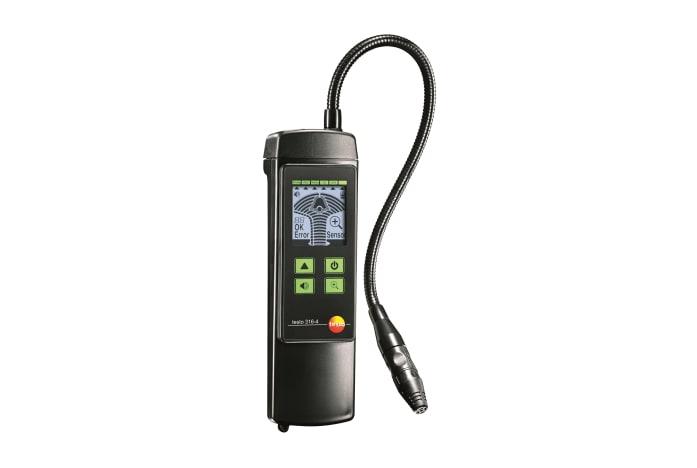
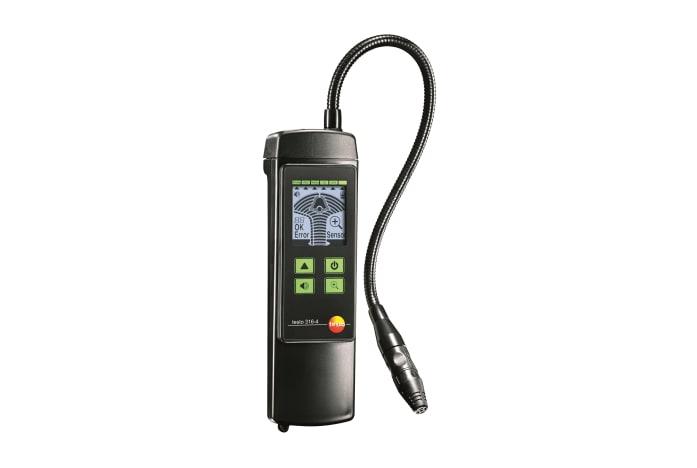
testo 316-4
0563 3165
EAN:
4029547012792
4.695,00 kr.
/ Piece excl. VAT
OutOfStock
5.868,75 kr. Incl. VAT
Produced to order
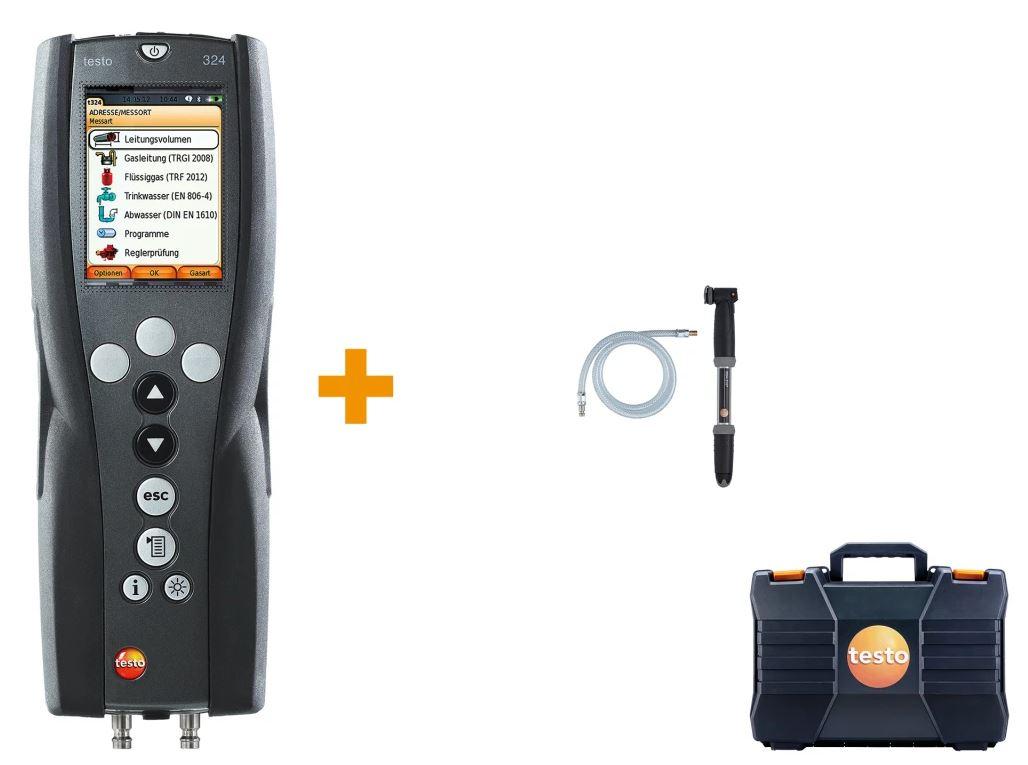
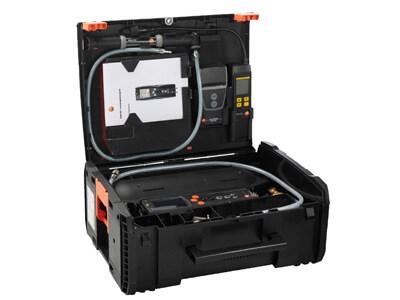
A leak detector helps you quickly find leaks so they can be repaired immediately. This minimizes waste and saves you unnecessary costs. Get a complete overview of measuring equipment for emission measurement, including flue gas analysis, soot measurement, nanoparticle measurement, and leak detection, as well as their applications.
Click here to read about leak detection
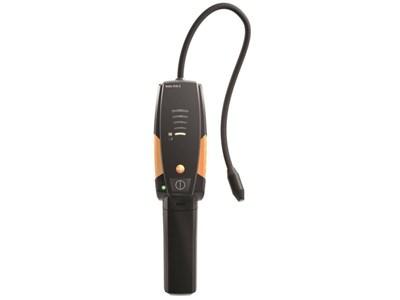



Leak Detector and Ultrasonic Meter
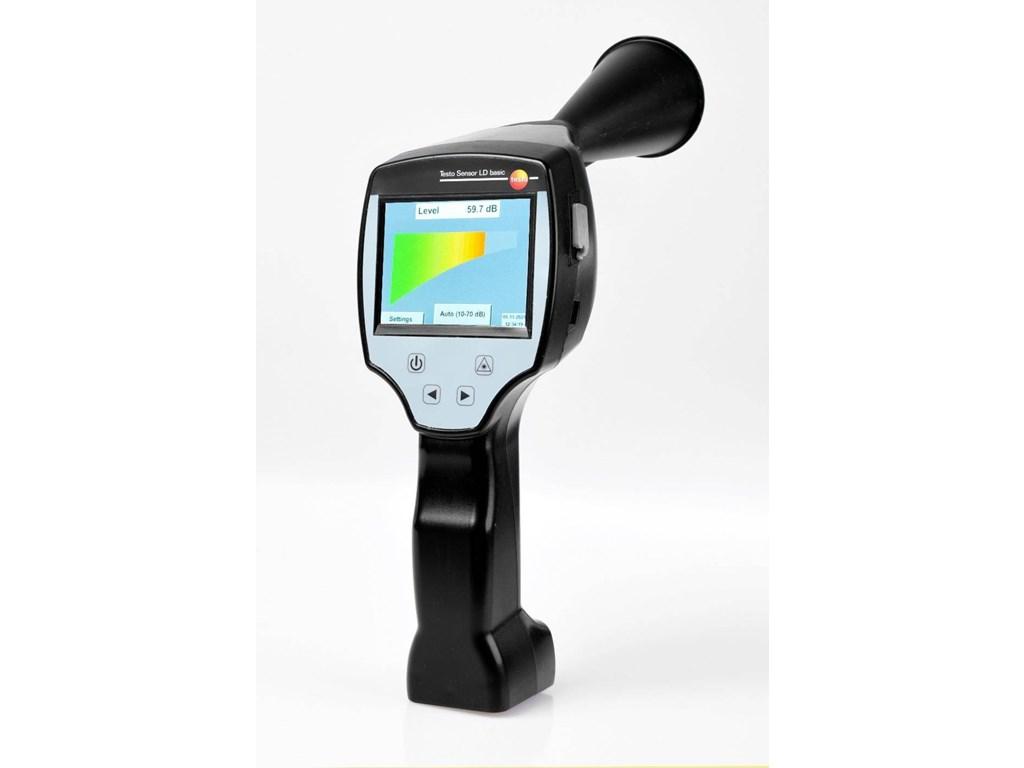
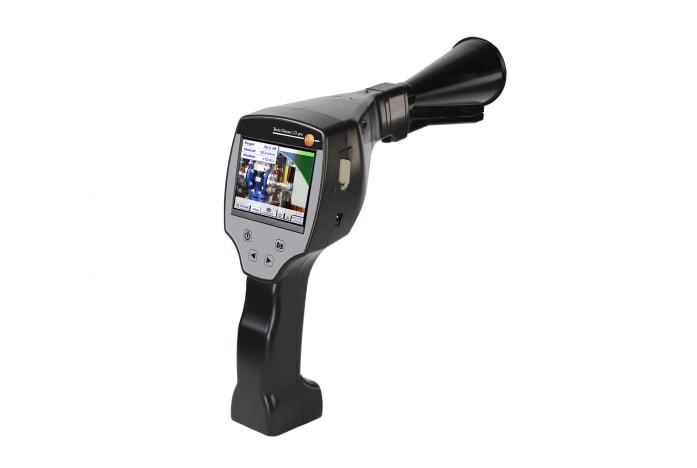
Ultrasonic meters are the optimal measuring equipment when it comes to finding leaks. Here you will find leak detectors as well as our large selection of Casella ultrasonic meters. An ultrasonic meter is a measuring instrument used for leak detection, to discover hidden wear on machines and equipment. The ultrasonic meters can measure both statically via spot measurements, dynamically over time, and via triggers. This means that you can monitor equipment that is constantly subjected to significant wear. There are incredibly many applications for ultrasonic devices.
Ultrasonic Meters for Leak Detection and Preventive Maintenance
In this category, you will find measuring instruments for leak detection.
Detect Leaks with an Ultrasonic Meter
SDT produces precise ultrasonic meters for spot measurement as well as for analysis and prevention. Ultrasonic is particularly suitable for detecting leaks in hidden pipe installations, and it works in such a way that the measuring equipment converts the ultrasound into a result that is audible to humans. This enables accurate detection of leaks even in very complex pipe structures. But ultrasound can be used for much more.
Preventive Maintenance with Ultrasonic Measurement
Mechanical wear on ball bearings, gears, and valve flaps in motors and turbines can lead to costly production stops and expensive downtime. With ultrasonic meters, you can catch irregularities in time and perform the necessary preventive maintenance to prevent this from happening.
Ultrasonic meters are also suitable for leak testing and leak detection, especially in compressed air systems, steam, gas, and vacuum systems. With the right ultrasonic meter, you are well-equipped in the work of preventive maintenance to optimize your production.
The fact that ultrasonic inspection is so popular among maintenance managers is due to the instruments being user-friendly, having a wide applicability, and a low acquisition cost.
Ultrasonic inspection is today a firmly established part of preventive technologies such as vibration analysis and thermography. Ultrasonic is gradually being regarded as a crucial tool for production optimization in the industry.
You Can Also Use an Ultrasonic Meter
The application possibilities for ultrasonic technology are virtually inexhaustible, and that is precisely why ultrasound has such a broad appeal. Many inspectors check thousands of compressed air valves and locate leaks in boilers, condensers, and heat exchangers. Others combine ultrasonic inspection and thermography for additional safety regarding electrical panels and investigations of high-voltage systems.
An Ultrasonic Meter is Easy to Use
Ultrasonic instruments have always been considered user-friendly. SDT is a pioneer in design, and with their innovative Building Block concept, the new instrument SDT 270 can be delivered in more than 96 possible configurations. The user can now literally design their own unique instrument, tailored to their needs and applications. It is also possible to purchase additional equipment in consultation with our customer advisors.
Most detectors operate on the principle that they identify high-frequency ultrasound and convert it into audible sound, which can be heard through headphones. Additional features depend on the individual product, but most products have a visual indicator on a graphic display or a decibel measurement. Some can even log measurements for later analysis with an accompanying software program.
Excessive vibration and high temperature indicate a mechanical failure, but it is also clear that microscopic changes in friction, which are detected early with ultrasound, ensure more opportunities for planned maintenance. When issues are clarified early, you have the opportunity to reduce downtime and overall maintenance costs before the fault develops into a very costly repair.
Condition Monitoring
An application that has emerged alongside the new generation of detectors is CBM (Condition Based Monitoring) of rotating and non-rotating equipment. In both cases, friction generates high-frequency ultrasound. The friction is often inaudible due to surrounding noise and low-frequency vibrations. Changes in this are often an early indicator of breakdown and provide valuable data for vibration analysis.
Ultrasonic monitoring results in a change being identified much earlier in the failure cycle than is the case with other technologies. That is precisely why ultrasound is generally used to alert to early changes in conditions and for a preliminary diagnosis.
Condition-Based Lubrication of Bearings with Ultrasound
Over time, lubrication breaks down, and the friction force further wears the bearings. Ultrasonic systems that measure dBµV levels measure and predict the need for lubrication of bearings. When the measurements trigger an alarm, it is possible to rectify the damage before actual harm occurs to the bearings. The “Condition-Based Lubrication technique” advises the lubrication technician when lubrication is needed and also provides a warning if too much lubrication is added.
A problem associated with too much lubrication can be that seals are damaged. For the bearings on electric motors, this means that the grease comes through the seals and into the windings of the motor. At a paper manufacturer in the USA, they simply decided to stop lubricating motor bearings altogether, as it turned out to be cheaper to simply replace the bearings than to clean the motor of grease. This technique has become standard for many suppliers of lubricating oil and grease for production equipment.
Ultrasound Can Also Be Used in Electrical Applications
The applicability of ultrasonic inspection also involves the maintenance department, where scanning of electrical panels, crossfields, transformer systems, and high-voltage transmission and distribution lines is routine. There is increasing focus on safety and specifically the danger of arcs. Before opening high- and medium-voltage panels, inspectors use ultrasonic detection to listen for the ultrasonic level in the cabinet. The importance of identifying problems via ultrasound cannot be overstated.
Radio and TV interference are common challenges for cable TV providers. Often, the source of these disturbances is a faulty transformer or lightning arrester. Pinpointing the problem is quick and easy with ultrasonic scanning. The directional nature of ultrasound captured with a parabolic probe can reveal a range of issues from a safe distance.
Inspection of Steam Traps
A steam trap is an automatic valve that opens for condensate and non-condensable gases while closing for steam. It is designed to collect and remove water, air, and CO2, which hinder effective steam transfer, corrode system components, and cause water damage. Ultrasonic investigations of the entire steam system will reveal system leaks, blockages, stuck valves, and malfunctioning separators. Increased steam efficiency means significant savings and improved product quality.
Reveal Pump Cavitations with Ultrasound
Cavitations are the result of a pump spinning too fast, causing the surrounding water to be unable to follow the shape of the screw. Small bubbles of air develop behind the “propellers.” These bubbles have a destructive effect on the pump.
During normal data collection, inspectors use ultrasonic detectors to isolate random cavitations, which may be masked by low-frequency modulations. Using an ultrasonic detector with a contact probe, you can listen for small air bubbles that explode. Place the contact probe on top of the pump housing and adjust the gain so that shaft noise is filtered out. An experienced operator will quickly be able to identify when cavitation is present, whereas an inexperienced operator will greatly benefit from comparing with similar pumps.
Find Leaks in Heat Exchangers and Condensers
Pipe condensers and heat exchangers cool steam, which condenses into purified water that is returned to a boiler, where it is reheated into steam. Leaks in the piping system allow the intrusion of contaminants, which can result in corrosion and reduced lifespan. Keeping the water clean is key to increased efficiency.
The general inspection procedure is scanning with the measuring instrument at a meter's distance from the pipe installation. If a noisy area is found, it is recorded. Then switch to an extra sensitive sensor and scan from pipe to pipe. If the sound signal on the digital dBµV meter or the sound in the headset does not change from pipe to pipe, a leak is unlikely. This is especially true for the outer pipes in the installation, as these pipes are more likely to have noisy steam. If significant signal changes occur, there is reason to suspect a leak. If the leak is inside the pipe, the difference can be observed at the pipe opening.
Detect Leaks in Valves and Hydraulics
Over time, small leaks, blockages, and by-passes will occur in hydraulic systems. The cause of these faults can be detected with ultrasonic inspection. Hydraulic oil will form small bubbles that explode when forced through seals. Use a contact or magnetic sensor placed on the subject, and set the sensitivity to the highest on the instrument to reveal the small explosions. The sound profile from a hydraulic valve can be a constant hiss or an intermittent “gurgle.” Comparing similar areas in the system to trace blockages and passages will save hours of visual inspection and reduce costly downtime.
What Are the Next Steps in Leak Detection?
An ultrasonic meter cannot replace your maintenance planning, but as a supplement, the ultrasonic meter is an extremely professional instrument that can increase the yield of your efforts to reduce costly downtime and other heavy production costs. If you are interested in a successful and long-lasting ultrasonic control program, you should set clear goals and plan the implementation of these goals. If you do this, there is no doubt that the investment in ultrasonic measuring equipment will quickly pay for itself again.
Read more about measuring equipment here and see product videos on our YouTube channel.